







AI agent · live 24/7
Scheduling agent for meetings, availability, and booking flows
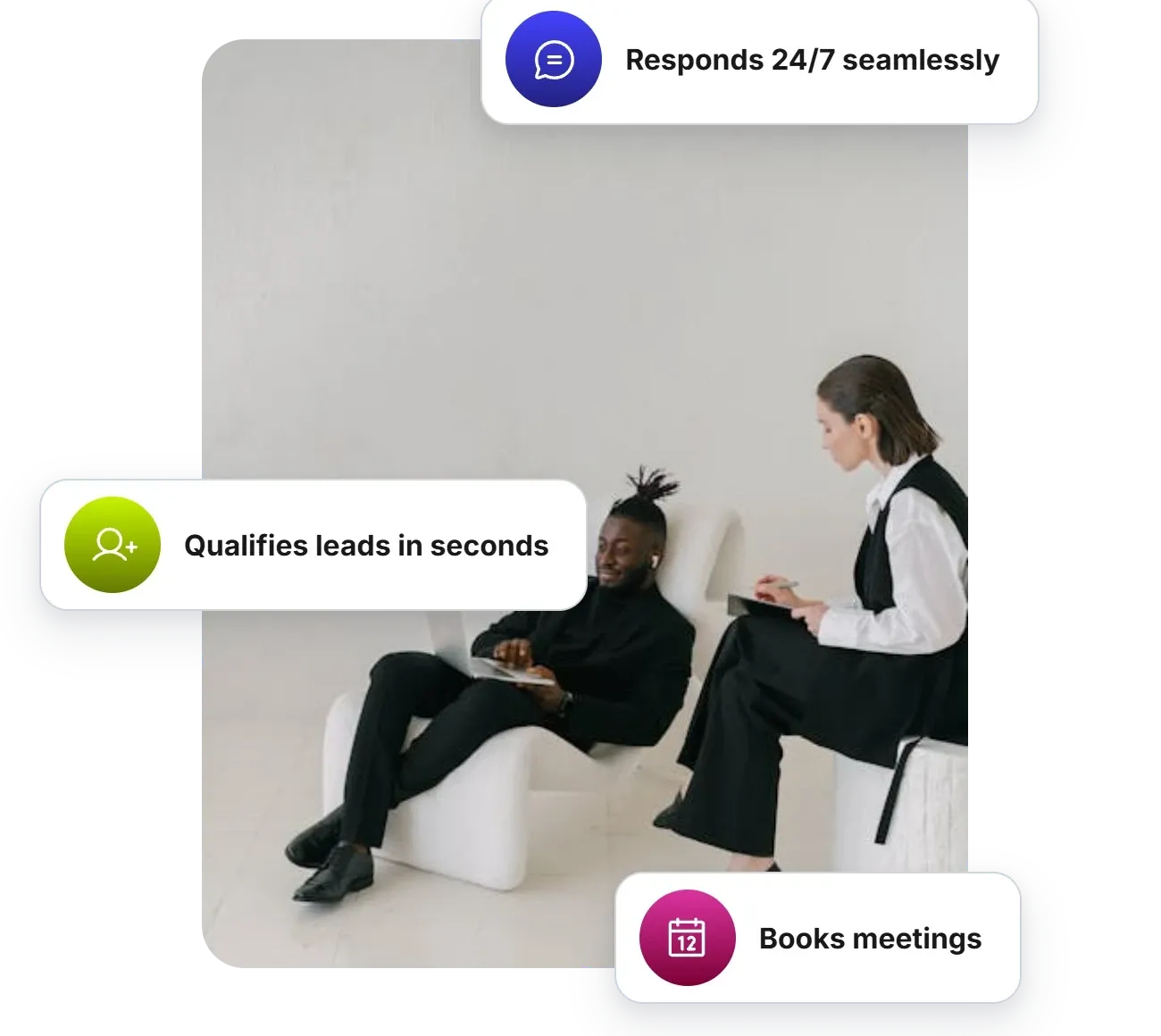
Let visitors ask for the right meeting, share their context, check availability, and book time without endless back-and-forth.
Your channels
Your tools
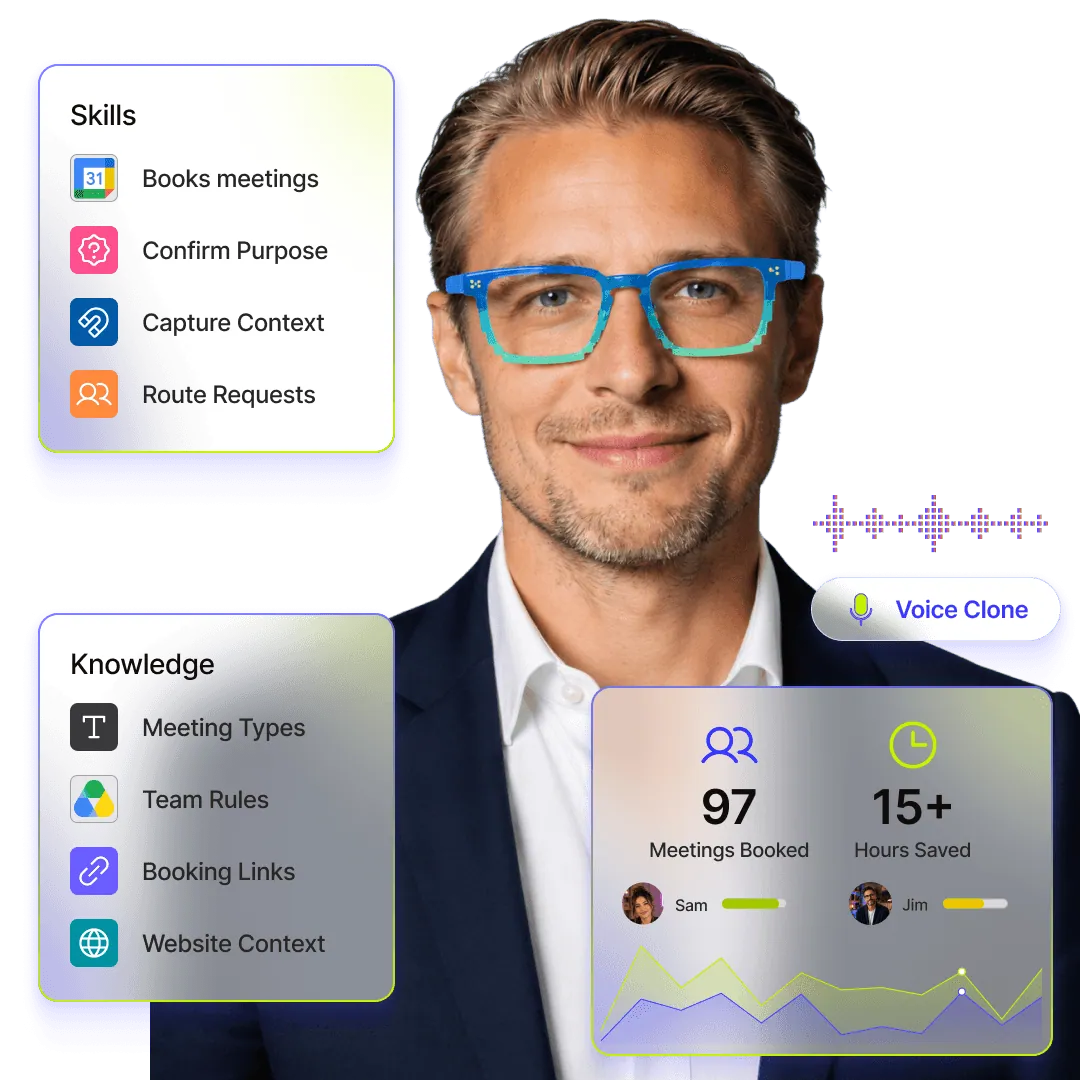
What the scheduling agent can do
Meeting booking support
Help visitors book meetings easily without waiting for manual replies, back-and-forth messages, or the right calendar link.
Availability check flow
Help people find available time, choose a slot, and move toward a confirmed meeting faster
Meeting purpose capture
Ask what the meeting is about before the call so every booking comes with useful context.
Meeting type guidance
Guide visitors to the right meeting type, such as demo, discovery, consultation, interview, support, or follow-up.
Pre call context
Collect role, company, goals, questions, urgency, and other details before the meeting starts.
Calendar link sharing
Share the right booking link when a scheduling link is the fastest or preferred way to book.
Timezone friendly booking
Make scheduling easier for people across locations, regions, and time zones without extra coordination.
Qualified meeting capture
Ask relevant questions before booking so teams receive better prepared and more useful meetings.
24/7 Booking access
Let prospects, customers, candidates, or partners schedule time anytime, even when the team is offline.
Reschedule request handling
Help visitors ask about changing meeting times, updating details, or finding a better slot when plans change.
Team handoff routing
Route meeting requests to the right person or team based on topic, account type, meeting purpose, or urgency.
No context prevention
Avoid empty calendar bookings by collecting the reason, goal, and key questions before the call.
BENEFITS
Turn scheduling intent into confirmed meetings
Help prospects, customers, candidates, and partners schedule the right meeting faster, with the context your team needs before the call begins.
More meetings booked
Make it easier for interested people to find a time and schedule before intent drops or the conversation goes cold.
Less scheduling back-and-forth
Reduce the manual messages, follow-ups, calendar checks, and coordination usually needed to get one meeting confirmed.
Better prepared calls
Give your team useful context before every meeting, so they know who is joining, why they booked, and what they need.
Fewer wrong meetings
Guide people toward the right meeting type, team, or next step so sales, support, hiring, and success teams do not waste time on mismatched calls.
Faster response to intent
Let people book when they are ready, even outside working hours, instead of waiting for someone to reply with availability.
Cleaner team handoffs
Route meeting requests with context, so the right person gets the right conversation without confusion or last-minute preparation.
Every meeting request should be easy to act on
Turn interest into scheduled calls with cleaner context, faster booking, and fewer back-and-forth messages.
Launching in phases. Limited access.
How it works
Set up your Double in three moves
Teach it what you know
Add your website, documents, LinkedIn and videos. Your Double answers from the sources you approve.Make it sound like you
Choose its voice, personality and the rules it follows. Assist sets it up with you and asks before anything goes live.Put it to work
Share your Agent page, add it to your website, or connect the channels your plan includes. You see every conversation in your inbox.
Similar AI Agents
Browse other purpose-built AI solutions designed to automate workflows across various roles and industries.
Questions before you build your scheduling agent?
Answers to common questions about booking meetings faster, capturing context, routing requests, and reducing scheduling back-and-forth.How is a Scheduling Agent different from a calendar link?
A calendar link helps someone pick a time. A Scheduling Agent can understand what the meeting is for, ask for context, guide people to the right meeting type, and help create a more useful booking.
Can people still book meetings directly?
Yes. The agent can help people move toward booking quickly, whether that means checking availability, sharing the right booking link, or guiding them to the correct scheduling flow.
Can it collect context before the meeting?
Yes. It can ask for details like name, company, role, meeting purpose, urgency, goals, and questions so the team has useful context before the call.
Can it route people to the right meeting type?
Yes. It can guide visitors toward a demo, discovery call, consultation, support call, interview, partnership chat, or follow-up based on what they need.
Can it help reduce back-and-forth messages?
Yes. Instead of manually asking for availability, meeting purpose, contact details, and the right calendar link, the agent can collect those details in one flow.
What happens if someone is not ready to book yet?
The agent can answer questions first, share helpful resources, understand what the person needs, and then guide them toward booking when the timing is right.
Can it support visitors across time zones?
Yes. It can make scheduling easier for people across different regions by guiding them toward available times and reducing the confusion that usually comes with time-zone coordination.